TL;DR
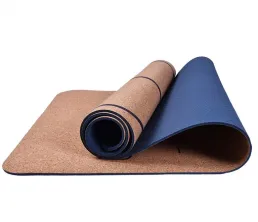
Cork yoga mats are worth it for people who want a firm, natural-feeling surface with good sweat-activated grip, but they are not ideal for everyone. These mats use a cork top layer that naturally resists odors, usually bonded to a natural rubber or TPE base. A 5mm cork mat works especially well for standing stability in sweaty flows, while users who need plush joint cushioning are usually better served by softer foam materials.
Cork works best for a specific kind of yoga practice
Cork yoga mats make the most sense in practices where stability matters more than softness. That matters more than trend appeal. The firm density of a cork surface prevents it from compressing much under body weight, so you get clearer physical feedback through the feet during single-leg balances in Vinyasa or Ashtanga flows.
That same firmness is the tradeoff.
In heated studios, cork feels grounded and stable. If your routine leans toward restorative yoga, Yin, or Pilates, the same mat can feel hard fairly quickly. People spending 45 minutes lying on their spines usually prefer the plush cushioning of a 6mm PVC or NBR foam mat on hard studio floors.
The real advantage is grip under moisture, not instant dry tack
Cork’s main performance advantage is not that it grips better than every other mat in every condition. It usually does not. The advantage is what happens once there is a little moisture on the surface. Cork contains a naturally occurring waxy substance called suberin, and when suberin gets wet, friction increases between your skin and the mat. That is why cork gets recommended so often for hot yoga and other sweaty classes. It is also why reviews of cork mats can sound contradictory: someone with completely dry hands in a cool room can think the mat feels slick, while someone halfway through a heated class thinks it is one of the grippier surfaces they have used. If Downward-Facing Dog is where mats usually fail for you, dry cork will tell on itself fast.
A quick water spritz usually fixes the dry-start problem.
I do not love that a mat sometimes needs a small activation routine, but that is the real instruction here: lightly mist the hand and foot zones before practice and the traction shows up immediately. Bikram people usually understand this without much explanation. In a non-heated room, people who expect instant tack sometimes just need a little time with the mat.
Comfort is where cork can lose buyers
Comfort is where cork can lose buyers, and fairly. Most standard cork mats measure between 4mm and 5mm thick. A 5mm thickness protects joints against hard studio floors, but the high density of the cork material means it still lacks the sink-in feel of softer synthetic alternatives.
Body weight, injury history, and practice duration matter more here than marketing copy does. Practitioners with sensitive knees or prepatellar bursitis often find prolonged kneeling on cork painful. I know the cleaner answer is to buy the mat that matches the problem. I still lean toward a standard 4mm cork mat plus a dedicated yoga knee pad or a folded cotton blanket instead of a thicker, heavier cork mat, even though that is a slightly fussy setup. It preserves the standing stability without punishing the joints during low lunges.
“Eco-friendly” depends on what the mat is made of underneath
The eco claim needs a second look. A cork yoga mat is usually a cork surface bonded to another base material, so its environmental profile depends on both layers. Harvesting cork from the Cork Oak tree is a regenerative process: the bark is stripped by hand without cutting down the tree, and the tree absorbs up to five times more CO2 while regrowing its bark.
Pure cork is too brittle to roll. Manufacturers laminate it to a flexible base, commonly natural tree rubber or Thermoplastic Elastomer (TPE). Natural rubber bases, like the one used on the $80 42 Birds Cork Yoga Mat, offer high durability and biodegradability but add significant weight. People hear “cork” and stop there, which makes the category sound simpler than it is, because by the time a mat is flexible enough to roll and durable enough to use regularly, the material underneath is doing a lot of the environmental and performance work too. TPE bases weigh less and cost less, but they are synthetic plastics that compress permanently over time. Buyers should verify the base material before accepting broad sustainability claims.
Durability comes down to construction quality, not cork alone
When a cork yoga mat degrades, buyers often blame the cork first. The failure point is usually the bonding layer. Cheap mats use adhesives that break down under heat and sweat, causing the cork to delaminate from the base. Higher-quality mats heat-bond the layers to reduce edge curling and flaking.
User habits matter too. Because cork is a wood derivative, it must remain under tension and should be rolled with the cork side facing out. Rolling it with the cork on the inside can cause the material to crunch and develop micro-cracks. Cleaning is simple but not forgiving: use water and mild dish soap, wipe with a damp cloth, then let the mat air-dry completely flat.
Cork vs rubber, PU, and TPE: where the value equation shifts
Most shoppers are not really deciding between cork and nothing. They are cross-shopping cork against TPE, Natural Rubber, PU, and PVC.
- TPE (Thermoplastic Elastomer): Usually $25 to $40. Lightweight and soft, so it works for beginners and travelers. It also compresses faster and does not give you the same wet grip as cork.
- Natural Rubber: Mats like the Jade Harmony retail for $100 and offer unmatched dry grip. They also often weigh 5 to 7 pounds and carry a distinct tire-like odor.
- PU (Polyurethane): High-end PU mats, such as the $160 Liforme Classic, deliver intense tackiness and sweat grip. PU shows sweat smudges instantly and requires strict cleaning, whereas cork hides moisture marks and uses antimicrobial suberin to resist mold.
- PVC (Polyvinyl Chloride): Extremely durable and cheap. The $25 Gaiam Premium is the familiar example, and it is common in gym rentals, but it provides poor sweat traction and relies on petroleum-based plastics.
The right buyer profile: when cork is worth the money
A cork yoga mat is worth the money if you prioritize sweat grip, firm footing, and lower-plastic materials more than plush cushioning. If softness comes first, it usually is not.
Buy cork if:
- You practice hot yoga or Bikram and want to stop using a separate microfiber towel.
- You want an odor-resistant surface that does not off-gas chemical smells.
- You prefer a firm, grounded platform for standing balances.
Skip cork if:
- Your hands stay completely dry during practice and you dislike misting your mat.
- Severe knee pain is the issue; you need 6mm or more of soft compression.
- You commute on foot and want to avoid carrying a mat that weighs up to 6 pounds (a common weight for cork bonded to natural rubber).
FAQ
1. Are cork yoga mats slippery when dry?
Yes. They can feel slick if your hands are completely dry. Lightly spraying the mat with water before a session usually solves the issue.
2. Are cork yoga mats good for hot yoga?
Yes. They perform especially well in heated rooms because the grip improves as you sweat, which is why many practitioners stop using a separate yoga towel.
3. Do cork yoga mats have enough cushioning for sensitive knees?
Sometimes, but not always. Cork is dense and firm, so a standard 4mm or 5mm mat can still feel too hard for sensitive joints even when the thickness sounds adequate on paper. Users with knee pain are usually better off adding a folded blanket or a foam knee pad for low lunges than buying a thicker, heavier cork mat and giving up some of the standing stability that made cork appealing in the first place.
4. How do you clean a cork yoga mat without damaging it?
Wipe the surface with a damp cloth using water and a drop of mild dish soap. Avoid harsh chemical sprays, submerging the mat, or using heavy oils. Always let it air-dry flat.
5. Is a cork yoga mat better than a rubber mat?
It depends on the practice. Cork is better if you sweat heavily and want an odorless, antimicrobial surface. Rubber provides superior grip for dry hands but is heavier and often retains a distinct rubber scent.